
SQL and Business Data Analysis
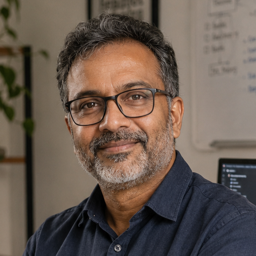 甄選並驗證:Arjun Mehta, Data Scientist, Coinbase
In every company past a certain size, the same argument runs on a loop: marketing says retention is 62%, product says it's 48%, finance has a third number, and nobody is technically wrong. They are answering different questions, but each one is showing it as *the* number. The person who can end that argument — quietly, without taking sides — is the person who can read the database, write the query, and pin the definition. This course is how you become that person. It assumes you can navigate a spreadsheet and that you have, at some point, copied a `SELECT` off the internet and gotten it to work once. It does not assume you know what a join is. By the end, given a stakeholder Slack message and a warehouse you've never seen, you can list the tables, work out which ones connect, write a multi-step query as readable CTEs, compute cohort retention or funnel conversion or DAU/MAU the way the industry actually defines them, validate the row counts so you don't ship a number inflated by a silent join blow-up, and write the answer up with the four things it needs to survive contact with other humans — window, population, definition, caveats. A lot of what separates a trusted analyst from a frustrated one is not syntax. It's grain discipline. It's noticing that `NOT IN` silently broke because of a NULL. It's recomputing last week's number and explaining why it's different. It's saying *which* definition of "active user" you used. The lessons here are arranged so each of those habits becomes obvious — not because the course preaches them, but because the order makes the wrong move feel wrong before you make it. The SQL is the easy part. The judgment underneath it is what you'll leave with.
課程目錄
關於課程作者
The common thread in Arjun Mehta’s work is the journey from an uncertain question to a decision someone can defend. He has forecast demand for retail operations, modeled customer attrition for subscription products, built language systems that classify support conversations, and analyzed healthcare data to identify variations in patient outcomes. Depending on the problem, Arjun may design an experiment, train a predictive model, construct a data pipeline, or conclude that a simpler statistical analysis provides the more reliable answer. He works primarily with Python, SQL, Spark, and cloud-based machine-learning platforms, but places equal emphasis on data quality, model monitoring, privacy, and clear communication. Now leading a multidisciplinary data-science team, he remains closely involved in the work between prototype and production, where analytical promise must become a dependable part of everyday operations.
評價 (3)
- snappy_hedgehog
clear and practical
- winsome_cheetah
muy claro y útil
- savvy_macaque
super helpful