
Biotechnology, Genomics, and the Life Sciences Industry
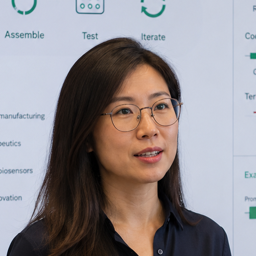 甄選並驗證:Linh Tran, Laboratory Research Assistant, Codexis
Biotechnology feels opaque: jargon-heavy (monoclonal antibodies? CRISPR-Cas9? CAR-T?), slow (why does drug approval take 10+ years and $1 billion?), and run by distant experts. But the industry—therapeutics, diagnostics, agriculture, manufacturing—is reshaping medicine and food right now. If you're considering a career transition into biotech, evaluating investment opportunities, scaling a lab, or trying to make sense of policy debates, you need an integrated mental model, not just scattered facts. This course teaches you how biotech *actually works*. You'll understand the workflow stages (from target discovery to FDA approval, or from crop challenge to engineered seed), the enabling technologies (CRISPR, mRNA, cell therapy, genomic sequencing) and their real tradeoffs, the regulatory landscape that shapes timelines and costs, and the business structures that follow from technical constraints. You'll see why a monoclonal antibody costs less than CAR-T, why most drug programs fail, and why genomic sequencing cost collapsed 100,000-fold in 20 years. Real companies ground every concept: Moderna's mRNA vaccine (from idea to approval in under a year during COVID), Illumina's sequencing dominance, CRISPR Therapeutics' first-approved gene therapy, and the founders whose decisions at each stage determined outcomes. You'll trace workflows end-to-end—not as theory, but as decisions: Should we pursue CRISPR or RNAi? Buy diagnostics or build internally? Partner with pharma or go independent? What does our manufacturing bottleneck really cost? By the end, you'll navigate the full landscape: identifying which segment of biotech matters for your problem (therapeutic, diagnostic, agricultural, or industrial biotech); reasoning about which technologies and platforms apply and why; understanding timelines and capital needs; and engaging confidently with colleagues, founders, investors, or regulators on their own ground. You won't be a molecular biologist—but you'll think like someone who actually works in the industry, and you'll make better decisions as a result. Whether you're a software engineer pivoting to biotech, an investor evaluating companies, a lab technician planning your next role, or a policy maker weighing regulation, this course closes the gap between scattered knowledge and a coherent model of how modern biotechnology and genomics shape the world.
課程目錄
關於課程作者
A failed assay does not stay a laboratory problem for long—it can affect a clinical timeline, a manufacturing run, or an entire regulatory submission. Dr. Linh Tran has spent her career working across those boundaries. Trained in molecular biology and bioinformatics, she has developed cell-based assays, analyzed genomic datasets, optimized protein-production processes, and helped move experimental formulations into pilot manufacturing. Her later work expanded into clinical-study support, technology transfer, quality investigations, and regulatory documentation, giving her a practical understanding of what it takes to turn an interesting biological result into a reproducible and compliant product. Linh is especially effective when projects become complicated: she can trace a problem from raw data to laboratory protocol to production process, then bring the right scientific, engineering, and quality teams together to resolve it.
評價 (4)
- rustic_lemur
非常棒!
- mirthful_ibex
内容太基础了
- smooth_gecko
very helpful
- wavy_dreamer
love it!