
Civil Infrastructure and Bridge Engineering Foundations
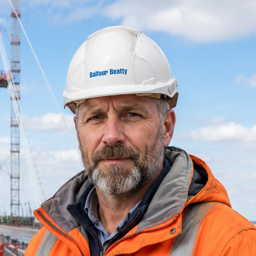 Curated and verified byAdrian Cole, Bridge Engineer @ Balfour Beatty
Every bridge you drive across is solving a silent engineering problem: carrying millions of pounds of traffic across a span without flexing too much, without rusting away, without failing. When it does fail — and they do, sometimes catastrophically — the question is always the same: how did we miss this? The answer is usually not dramatic. It's often a concrete deck that spent fifty years absorbing road salt through insufficient cover, or steel members that cracked from the repetitive hammer of traffic. The clues were there the whole time. The inspector saw them, the engineer read the report, and a decision was made: repair it now, or wait? Spend five million, or thirty million? Inspection interval of two years, or four? This course teaches you how to read those clues. It is grounded in real infrastructure, real timelines, and real failure data. You'll learn how bridges carry loads through different structural systems (beam, arch, cable-stay, suspension), why concrete rebar corrodes in predictable patterns (chloride thresholds vary 250-fold depending on grout quality), and how to predict whether a corroding structure will need repair in five years or fifty. You'll understand inspection standards (NBIS 2022), condition ratings, and the practical decision frameworks that state DOTs and city engineers use to allocate billions of dollars across aging portfolios. The course is built for people who need to make decisions about infrastructure: engineers and technicians who inspect and design bridges, public-sector staff managing maintenance budgets, and project managers who want to understand the systems they're responsible for. It assumes you're comfortable with high school physics and math, but no prior bridge-engineering knowledge. By the end, you'll be able to look at a bridge, diagnose what's deteriorating and why, predict how long it has before failure without intervention, and recommend the right strategy — maintenance, preservation, rehabilitation, or replacement — based on evidence and cost-effectiveness. You'll speak the language of ASCE standards, understand what your inspectors are measuring, and know how to read the real timescales of bridge failure. You won't be a structural engineer, but you'll understand how these systems actually work and fail.
Lessons
About the course creator
River crossings, urban viaducts, rail overpasses, and aging highway structures form the map of Adrian Cole’s engineering career. A licensed civil and structural engineer, he has completed load ratings, finite-element analyses, steel-girder and prestressed-concrete designs, foundation coordination, rehabilitation studies, and construction-document packages for public infrastructure projects. His responsibilities have taken him from the design office—where he prepares calculations, drawings, specifications, and cost estimates—to active job sites, where he inspects concrete, piles, bearings, and contractor workmanship. Adrian also coordinates with roadway, drainage, geotechnical, environmental, and government-agency teams, reviews the work of junior engineers, and approaches every design with equal attention to structural safety, constructability, long-term maintenance, and public use.
Reviews (10)
- sparkly_wren
love it
- frosty_lobster
Super Kurs!
- daring_mariner
adorei
- shady_climber
thx
- ruddy_hiker
super clear